The End of Coffee?
The End of Coffee?
Authors: Marlie Fitch, Madison Farquhar, Haley Ray, Charlotte Ronan, Joshua Jackson
Coffee is one of the world’s most consumed beverages. Originating in Ethiopia in the 15th century, coffee was traded across the globe as it quickly rose to popularity (Myhrvold). By the 18th century, coffee production rose as the process depended entirely on colonial plantations in order to keep up with the high demand for the drink. Today in the 21st century, waking up at the crack of dawn to a hot cup of coffee is a routine that hundreds of thousands of Americans share. With a seemingly endless amount of supply chains, and thousands of coffee shops in each and every corner of the U.S., coffee–the world’s second most valuable legal commodity–is undoubtedly a staple in American society. A world without coffee can be hard to imagine, yet that fantasy is on its way to becoming a harsh reality. Despite the surplus of coffee related products that have been in production since the 18th century, the beloved drink is now at risk of extinction due to climate change.
In the U.S., the rise of coffee grew alongside America’s entrance into World War I. Instant coffee started as a stimulant for soldiers, yet its popularity grew outside the battlefield. As factory work rose in the U.S. as the country left World War I and entered World War II, coffee became a “Tool to battle the fatigue of long hours” (Bertinetti). Daily consumption during wartime and factory shifts created a social culture surrounding coffee. Soldiers and workers alike would take breaks from their duties in order to chat while taking a few sips of the hot drink. Coffee had become more than just a stimulant, rather, it transformed into a daily necessity. A dependency on coffee had crept its way into American culture. Coffee, while providing social benefits, also has the potential to inflict medical issues onto consumers. In a 2023 study published by the Dove Medical Press, it was reported that 50% of the participants–consiting of young adults—drank coffee daily. Participants reported experiencing a range of caffeine-related side effects, including: increased anxiety, withdrawal symptoms, and disrupted sleep (Lone, et al). Additionally, coffee is more than just an addictive drink, but also “An escape, and often, a reflection of societal values and nuances” (Bertinetti). Today, coffee is incorporated into wellness products, status branding, and lifestyle aesthetics. This dual nature, as both a stimulant and a symbol, shows how coffee manages to remain in the center of American culture.
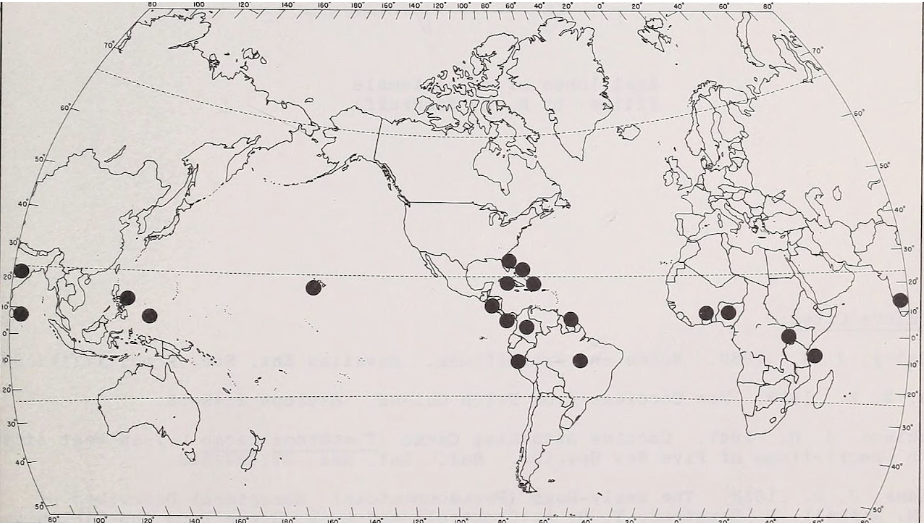
Coffee Producing Regions of the World
Not only has coffee impacted American society, but it has also reshaped global factors, including: climate change, the waning availability of arable land, and an increase in productivity pressures. These interconnected challenges threaten not only economic stability, but also individual livelihoods worldwide. Due to factors such as erosion and pollution, the world has lost a third of its arable land over the past 40 years. This is happening at an alarming rate as new research shows that nearly 33% of the world's adequate food-producing land has been lost at a rate faster than the pace of natural processes to replace diminished soil (“Feeding the Future”). It is estimated that it would take around 500 years for a mere 2.5m of topsoil to be created under the current state of global soil degradation (“Earth Has Lost a Third of Arable Land…”).
Cafe Culture
494 - Integrative Experience - Fall 2025
Climate change is impacting not only the amount of production of a crop, but also, the process of farming itself. Without suitable land, coffee, and every harvestable crop, is at severe risk of extinction. Group One 3 Simultaneously, agricultural systems are under an increasing pressure to sustain economic growth, where, “Globally, productivity growth accounts for a rising share of the increase in agricultural production, easing pressure on natural resources to supply the rising demand for food and agricultural commodities” (“Weather and Climate”). As productivity is increasingly relied upon to meet global food demands, an undeniable pressure is heavily applied to agricultural systems. As agricultural productivity becomes the primary lever through which farmers are expected to deliver greater output with fewer resources, the human costs of that pressure is mounting, especially among those who do the farming.
The stress of dealing with the need to produce more agricultural products with fewer resources available can chip away at a person's well-being. Farmers exhibit disproportionately high rates of depression, anxiety, and suicide compared to the general population. In the US, male farmers, ranchers, and agricultural managers recorded a suicide rate as high as 32.2 per 100,000 in some analyses, which is nearly double that of other occupations (Sussell). The intersection of climate change, land degradation, and escalating productivity demands unveiling a crisis that extends far beyond the discussion of economics. It is not just soil that is eroding, but also, the mental well-being of those who work to put food on American tables. As long as global systems rely on farmers to carry the weight of increasing demands, all while lacking proper structural, financial, and mental support, the cycle of tension and loss will prevail. Addressing these issues requires not only technological advancements but a renewed commitment to sustainable practices, investments in research, and support for farmers’ wellbeing.
Not only is coffee impacting farmers in the United States, but it is also heavily affecting individuals harvesting the crop in other parts of the world. For example, coffee farmers only earn 7-10% of the American retail price of coffee, while the workers only earn 2% of the retail price Group One 4 (“No Child For Sale”). As a result of this, many parents in South American countries have no choice but to pull their children out of school so that they can work alongside them in order to earn enough money to survive. Children as young as 6 are working eight-to-ten hours a day in hazardous conditions in order to harvest coffee (“Bitter Brew”). Forced labor and slavery are prevalent in the coffee industry. Many coffee workers are enslaved due to owed debts, and find themselves trapped on plantations with no money to flee (“Bitter Brew”). Many individuals working in the farming aspect of the coffee industry struggle due to the inconsistencies of the job. As the price of coffee rises in the U.S., more people are pushed to join coffee harvesting, yet when the price drops, many people are then left in poverty and hunger (“Bitter Brew”).
One way to combat the issue of worker exploitation is to research coffee brands before purchasing them. Starbucks, a brand that claims its coffee and tea products are 100% ethically sourced, was recently sued by the National Consumers League because its methods of getting coffee have proven to include child labor, human rights and labor abuses, forced labor, and many more types of harassment (Bhatnagar). While boycotting every unethical coffee brand may hurt large corporations, it would in turn, pose negative consequences toward farm workers who are already struggling to make ends meet in harsh working conditions. Often paired alongside coffee, dairy milk and sugar are both large contributors to rapid climate change, as well as at risk of going extinct as a result of it. Dairy farming and milk production take place all over the world, with its global demand only continuing to increase due to rapid population growth (WWF). Climate factors have “Increased heat stress in dairy livestock,” resulting in a reduction of, “Feed intake, milk production, and livestock fertility” (“Weather and Climate”). Similarly, dairy production itself has detrimental effects on the environment, contributing toward greenhouse gas emissions, deforestation, soil erosion, and the consumption of large amounts of water (WWF). If dairy milk were to go extinct alongside coffee, the environment might be better off as “Plant-based milks on average generate roughly one-third or less of the greenhouse gas emissions of cow’s milk, and most use considerably less water” (Santo). There are a plethora of different plant-based alternatives to milk, the most popular being soy, almond, oat, coconut, and pea. Both pea and soy protein offer comparable protein content to that of dairy milk while also having substantially lower environmental impacts (Santo).
Sugar, another resource frequently paired with coffee, is another cultural and economic staple that is at risk of going extinct due to rising temperatures. Sugarcane farming has “Fueled deforestation in some of the world’s most threatened ecosystems,” and covers over 65 million acres of land worldwide (WWF). Stevia, an alternative to sugar, may be more sustainable for the environment, as it needs “Significantly less land and water compared to traditional sugarcane” (“Three Top Challenges”). Both dairy milk and sugarcane are two products that are culturally and economically entwined in the lives of Americans to the point where society would find a sustainable way to replace these staples the day they go extinct. However, until the threat of extinction is too severe to mend, the commonality of the standard forms of dairy milk and sugarcane will remain prevalent, regardless of their environmental impacts. American culture is one of excess and overconsumption, with the widespread availability and culture revolving around coffee serving as a prime example. With there being multiple coffee shops per street, and even found inside universities and workplaces, a cup of coffee is always within reach. Coffee is not a necessary drink that sustains human life, but rather, it is a legalized drug which increases productivity and encourages social engagement in America’s work-centric culture. While coffee increases productivity in America, other countries suffer from the effects of the country’s dependency on the drink. America’s overconsumption takes a huge toll on the environment, as well as perpetuates forced labor in other parts of the world as they try to keep up with this massive demand. It is clear that this culture of excess is negatively impacting the environment and societies all across the globe. If one form of hunger in America can be seen as a scarcity of coffee due to the discomfort and withdrawals that a lack of consumption may bring, Group One 7 this begs the question, which comforts is America willing to give up in order to protect the world?
PBS Black Coffee, Part 1 of 3 — The Irresistible Bean
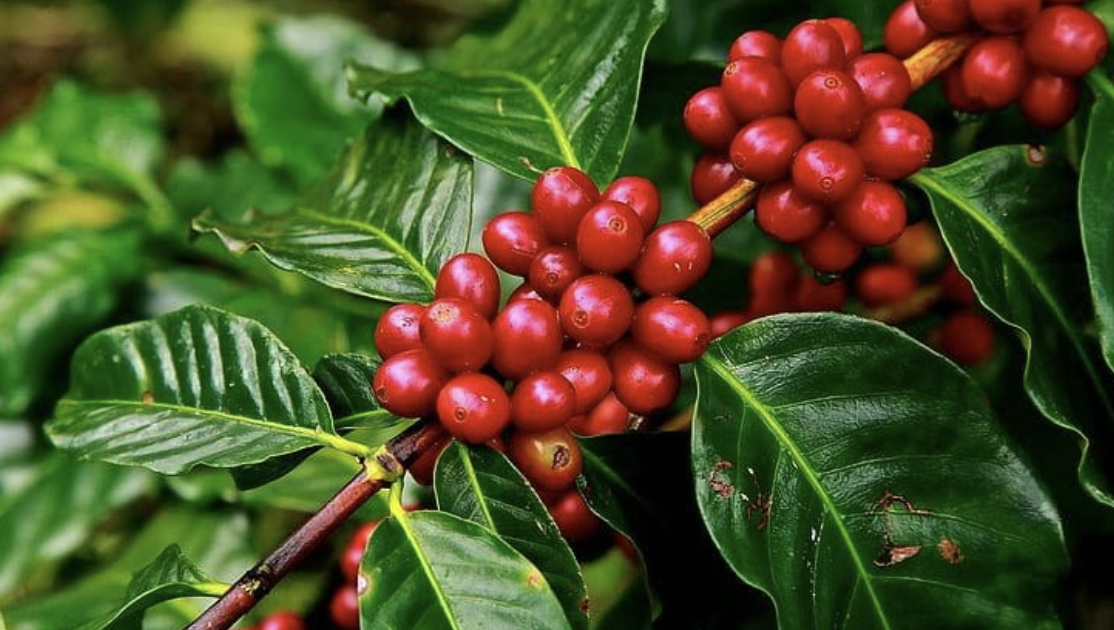
Coffee Bean
Additionally, the Fair Trade coffee certification is given by third-party organizations to ensure fair payment, adherence to environmental sustainability, and the well treatment of their workers. It is meant to prevent the harsh working conditions on plantations (Chen 2018). Typically, when people see this certification, it gives them a sense of comfort in drinking from their favorite coffee brand because they aren’t directly responsible for the economic exploitation of coffee harvesters. According to a paper from the Center for Global Development, which reviewed around 100 studies, it is impossible to tell if these certifications are anything other than a meritless title (Elliot, 2018). The average coffee drinker is then being lied to, unknowingly adding to the economic exploitation of forced labor.
PBS Black Coffee, Part 2 of 3 — Gold in Your Cup
Citations and Further Resources
Agricultural Research and Productivity.” Economic Research Service, U.S. Department of Agriculture, https://www.ers.usda.gov/topics/farm-economy/agricultural-research-and-productivity
Bertinetti, Roberta. The Evolution of Coffee Culture: From Bean to Cup to Lifestyle. Hospitality Insights, 19 Oct. 2023, https://hospitalityinsights.ehl.edu/coffee-culture
Bhatnagar, Parija. “Starbucks Sued for Alleged Deceptive Marketing of Its ‘100% Ethically’ Sourced Coffee | CNN Business.” CNN, Cable News Network, 10 Jan. 2024, www.cnn.com/2024/01/10/business/starbucks-lawsuit-deceptive-marketing
“Bitter Brew: The Stirring Reality of Coffee.” Food Empowerment Project, foodispower.org/our-food-choices/coffee/#_ftnref6
“Can We Ditch Factory Farming to Save Our Land?” Compassion in World Farming, https://www.compassioninfoodbusiness.com/rethinking-food/people-planet-animals/plane t-land-use/
Chen, Angus. “Do Sustainable Certifications for Coffee Really Help Coffee Growers?” NPR, NPR, 2 Sept. 2018, www.npr.org/sections/thesalt/2018/09/02/642269900/do-sustainable-certifications-for-cof fee-really-help-coffee-growers.
Elliot, Kimberly Ann. “What Are We Getting from Voluntary Sustainability Standards for Coffee?” Center for Global Development, 7 Aug. 2018, www.cgdev.org/publication/what-are-we-getting-voluntary-sustainability-standards-coffe e
Group One 9 “Earth Has Lost a Third of Arable Land in Past 40 Years, Scientists Say.” The Guardian, Guardian News and Media, 2 Dec. 2015, www.theguardian.com/environment/2015/dec/02/arable-land-soil-food-security-shortage.
“Ending Hunger: World Food Programme.” UN World Food Programme, www.wfp.org/ending-hunger. Accessed 1 Oct. 2025.
Lone, Aafreen, et al. “Coffee Consumption Behavior in Young Adults: Exploring Motivations, Frequencies, and Reporting Adverse Effects and Withdrawal Symptoms.” Psychology Research and Behavior Management, vol. 16, 2023, pp. 3925–3937. National Center for Biotechnology Information, https://www.ncbi.nlm.nih.gov/pmc/articles/PMC10519208/
Mora, Andrea Montero. “Coffee Modernization: The Green Revolution and Market Regulation in Costa Rica (1950-1980).” NiCHE, 3 Nov. 2021, niche-canada.org/2016/12/09/coffee-modernization-the-green-revolution-and-market-reg ulation-in-costa-rica-1950-1980/.
Myhrvold, Nathan. “Coffee.” Encyclopædia Britannica, Encyclopædia Britannica, inc., 23 Oct. 2025, www.britannica.com/topic/coffee. “No Child for Sale.” World Vision, 2016. http://nochildforsale.ca/wp-content/uploads/2016/04/Coffee_Infographic.pdf
Perez, M. G. (2013, March 22). Coffee Consumption Increases in U.S., Association Survey Shows. Bloomberg. Retrieved from http://www.bloomberg.com/news/2013-03-22/coffee-consumption-increases-in-u-s-assoc iation-survey-shows.html
Santo, Raychel. “Which Milks Are Best for the Planet?” World Resources Institute, 13 Feb. 2025, www.wri.org/insights/milks-environmental-impact.
Subramanian, Meera. A River Runs Again. PublicAffairs, 2015.
Sussell, Aaron, et al. “Suicide Rates by Industry and Occupation — National Vital Statistics System, United States, 2021.”
MMWR. Morbidity and Mortality Weekly Report, vol. 72, no. 50, 15 Dec. 2023, pp. 1346–1350, https://www.cdc.gov/mmwr/volumes/72/wr/mm7250a2.htm
“Three Top Challenges of Food Innovation (and How to Overcome Them).” FoodChain ID, 12 Sept. 2024, www.foodchainid.com/resources/sweet-sustainability-the-environmental-footprint-of-swe eteners-and-sweetness-enhancers/.
“Weather and Climate Considerations for Dairy | USDA Climate Hubs.” Usda.gov, 2015, www.climatehubs.usda.gov/hubs/northeast/topic/weather-and-climate-considerations-dairy.
WWF. “Dairy.” World Wildlife Fund, 2024, www.worldwildlife.org/industries/dairy.
Insider Inc. “Interior of Starbucks café with patrons.” Business Insider, www.businessinsider.com/67d24748b8b41a9673fa7d92?width=700