Art(e)Facts Project Undergraduate Researchers
Kai Martens-Wallace
English
Audrey Falkner
Journalism
Kimberly Vera
Sustainable Community Development
Lyla Barnett
Humanities
Art(e)Facts Project Graduate Interns
Catie Britt
Earth, Geographic, and Climate Sciences
Numerical models to reconstruct past polar ice sheets and climate
Durga Nirmaleswaran
Machine Learning, Coding, Artificial Intelligence
Alex Bradley
Sports Management
Managing and Visualizing Data Sets
Mackie Black
Women's Reproductive Medicine in Early Modern Recipe Manuscripts
Curation and Museum Work
Development of the Environmental Humanities Website
Art(e)Facts Projects
Affiliates
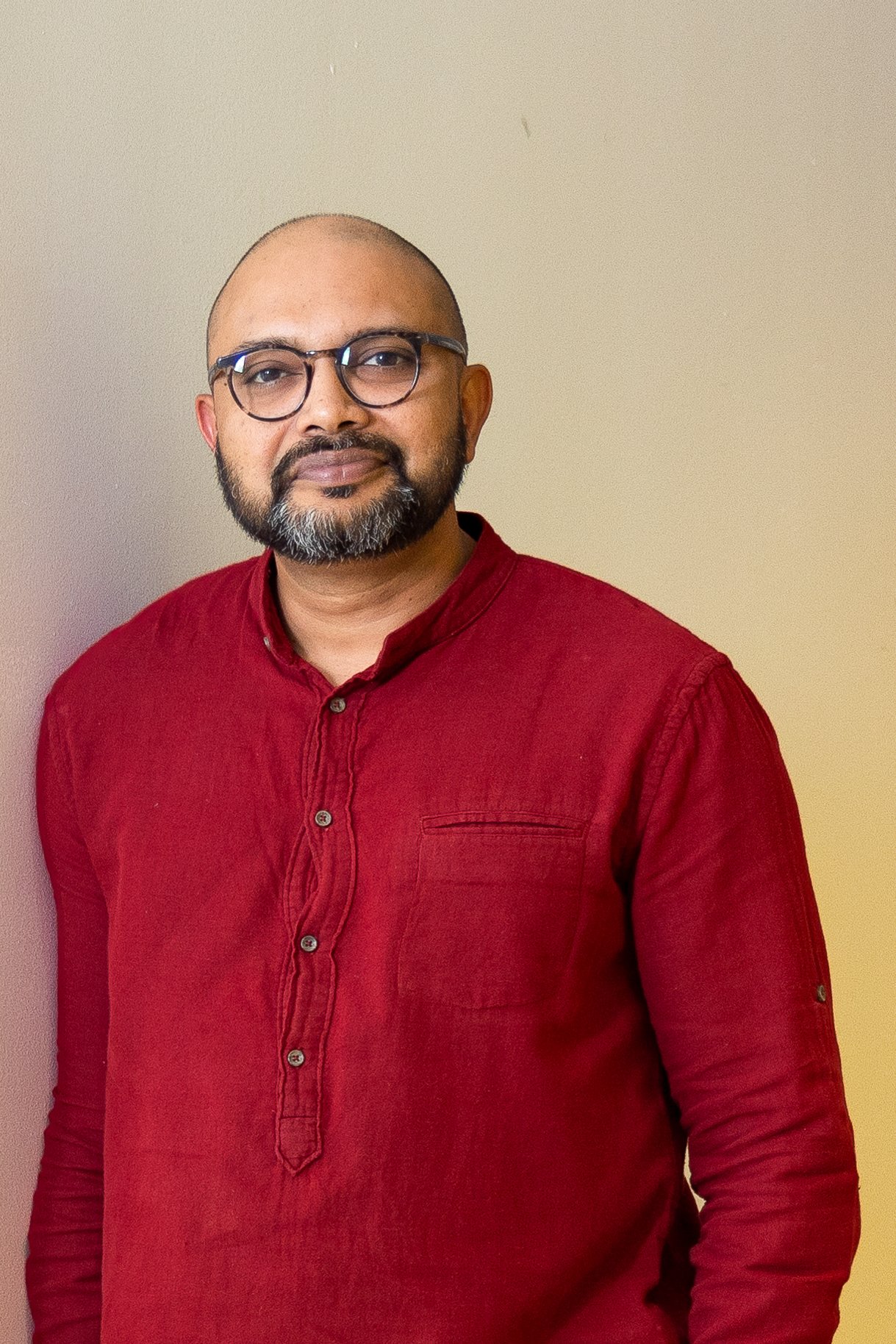
Malcolm Sen
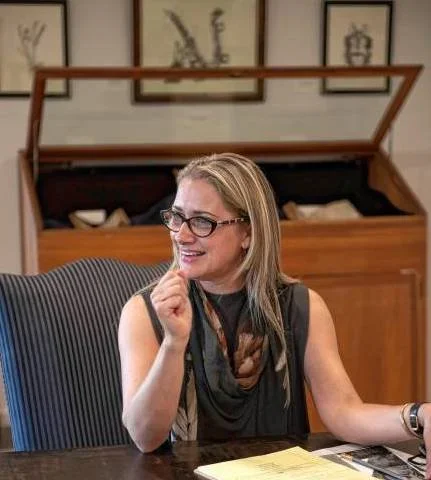
Marjorie Rubright
Anthropocene Lab
Affiliates




Select Alumni of the Environmental Humanities Specialization in English

Marketing Intern, Massachusetts Clean Energy Center

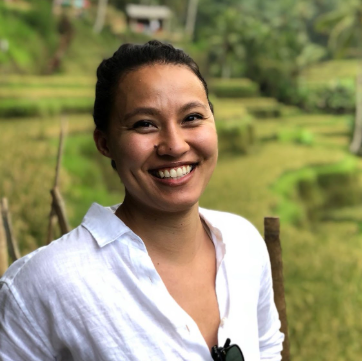

Jordyn Supernor

NASA intern working on documentation for the PACE satellite

Assistant Project Coordinator, ISO New England Inc.
Development Operations Coordinator, Rose F. Kennedy Greenway
Program director and climate change adaptation specialist, Chemonics International

Eric Strong
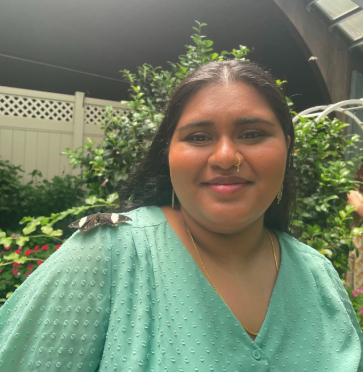
Pavi Parthiban

Aidan O'Neill
Lindsey Colby
Katy Schlaefer
Views on EH from Past Students of the program
Hannah Gould '25
Dual degree student pursuing a B.S in Plant and Soil Sciences and a B.A in English with an Environmental Humanities specialization.
-
I would define environmental humanities as a way of looking at and understanding our environment through different forms of digital and printed media, specifically literature. Environmental humanities addresses general environmental trends all the way to broader issues concerning climate change and environmental degradation. Environmental humanities is important to study because it allows humans to understand how we think about and react to our environment throughout history, challenging ourselves to consider our personal impact on our environmental state.
-
I was initially brought to the environmental humanities specialization through my work at the Renaissance Center. I knew since I arrived at UMass that I wanted to combine my scientific interests with my writing and reading skills to be able to talk about my surroundings and my experiences with nature. My advisor, Marjorie Rubright, inspired me to pursue the English major and begin my personal projects related to the environmental humanities, and here I am!
-
My experience and time as an English major has contributed to my environmental humanities interests through classes, work experiences, and events I've attended. In a variety of ways it's helped inform my experience and encouraged me to pursue things I would not have anticipated.
-
Through my research I have frequently turned to Gerard's Herbal. This has been the most important for me because it has been instrumental in helping shape my understanding of environmental history, and illuminated the ways in which humans have interacted with and used their surroundings in the past.
-
I think there are a lot of wonderful opportunities to get involved on campus if you're interested in anything related to the environment and sustainability. I have been involved in a variety of these opportunities, from clubs to research to simply taking related courses. However, I think sustainability goes beyond the natural sciences and should extend across the broader campus community. With that being said, I would love to see more opportunities being made for students across different majors so there's ways for everyone to get involved.

Annie Riley '25
English major with specializations in Environmental Humanities and Literature As History.
-
I would define environmental humanities as a broad and diverse area of study that focuses on environmental concerns using various lenses, going beyond strictly scientific, economic, or political analysis. I think studying environmental humanities is important because how we think about the current environmental crises and what we are able to imagine in terms of a better future have an impact on what we do and how we do it.
-
I had some interest in taking environmental humanities from the start because I care about environmental issues, although I did often feel like I wasn't good enough at learning scientific subjects to understand things deeply. I took Intro Postcolonial Studies with Professor Sen my sophomore year and that class introduced me to literary ecocriticsm. I really enjoyed writing about literature while focusing on environmental themes and landscapes in texts, which prompted me to take the rest of the classes in the specialization.
-
I have really enjoyed all of my classes within the environmental humanities specialization and incorporating what I learn in those classes into my other classwork. My classes have let me to believe that writing and storytelling can play an important role in addressing the climate crisis and environmental degradation. I had originally thought I wanted to be an elementary school teacher, but now I hope to have a job where I can use my writing, reading, and critical thinking skills to do something related to the environment or for environmental causes. My English classes have helped me feel more confident in my writing skills and my ability to pursue that kind of career and/or to pursue a masters at some point.
-
In Intro to Irish Literature with Dr. O'Callaghan we read the novel Solar Bones by Mike McCormack. The novel is set in 2009 and is told from the perspective of an Irish man who is dead but hasn't realized it yet and is recounting moments from his life. One of the central images of the book, which connects to the title, is a pile of disassembled wind turbines that the man sees go through his town in a truck. The way the wind turbines are abandoned because of the impacts of the financial crisis and the character's view of the parts as like a dead thing stuck with me. To me this means that even if people start efforts or projects to decarbonize or mitigate climate change, their lasting impact depends on the stability of the underlying structures. The government and economic structures within which environmental efforts happen often constrain the impact or longevity of such efforts and the scope of what they can try to do.
-
I think that there are many opportunities that are worthwhile to get involved in, although I feel like they aren't always advertised or promoted a lot. I also think there could be more, although I appreciate that UMass has a Sunrise movement chapter. I haven't been involved in any environmental advocacy or activism during my time at UMass. I am kind of cynical about organizations like Sunrise that claim to care about environmental justice and the unequal impacts of environmental issues and the climate crisis, yet do not mention or act on the need for Covid precautions. Disabled and sick people are one of the groups that are more heavily impacted by the effects of climate change and by natural disasters. Considering Disability Justice, a framework advanced by queer disabled people of color, is important in movements for climate action. Caring about and mitigating the spread of Covid in environmental organizing affirms that the pathogens we are exposed to are connected to environmental issues and that sick and disabled people belong in these movements.
I am currently doing an internship with the School of Earth and Sustainability (SES) this year in which I do climate science communication work to support SES in developing climate literacy training. For that I reviewed Massachusetts decarbonization plan, which is extensive but does advance the idea that the climate crisis can be addressed using market solutions and without altering the underlying systems of capitalism and settler colonialism. Government agencies like the one that wrote that plan have a great deal of control over what is even considered as a possibility in terms of decarbonizing and climate action, and they often perpetuate the idea that scientific, technical, and economic solutions are the only viable courses of action.
Grace Ziegel '25
English and Comparative Literature double major, pursuing a creative writing concentration and an environmental humanities specialization.
-
I see environmental humanities as the discipline which gives space and language to effectively combine inclusive (and often contradictory) positions, experiences, and narratives. To me, it is one of the few disciplines I know of which seems to favor every other discipline; maybe can only be defined by comparing two or more pre-established events/experiences/knowledges. Environmental humanities sketches out a new, very-important role for literary studies and practices; it breaks down the habitual separation of humanities and sciences, the equally as habitual, but certainly less talked about, separation of humanities and daily, practical life.
Where, previously, intimacy with literature has been somewhat contained, exclusive and withheld from an outsider’s every-day life, environmental humanities opens the doors to bridging the gaps between what we know to be true and what we actually act on; what stories we want to tell and which ones are easy, acceptable to tell. Studying environmental humanities, in other words, has instilled in me a certain discomfort in believing literature to be about mastery of words, of stories, of histories: when we challenge this belief, we become capable of hearing one another more kindly, engaging in our immediate worlds more intentionally.
-
My initial exposure to the specialization was through Intro to Postcolonial Studies my sophomore year, which, incidentally, coincided with my happening upon UMass Permaculture Club volunteer hours. While the former was an academic, rather formal introduction to the specialization and field of study, the latter gave me a tangible, community-based application for the interest.
-
In retrospect, I have been interested in and engaging with environmental humanities for most of my life, long before I had the language or discipline to classify it. I have years of experience tending to the natural world, studying (and befriending!) more-than-human lives and spaces, and using personal literature as a record of these experiences. But it was not until I studied English—both within and outside of the specialization— that I understood what these previously singular, static experiences had in common; how moments across temporal and physical space can be read and engaged critically, side-by-side, to better understand their importance. Or, more, how creating an ongoing narrative out of these had the potential to influence and inform other people and their own narratives. Now, not only do I engage in these same spaces and activities more intentionally, but I also bring the language of environmentalism to the other fields I find myself in—academic or otherwise.
-
One I come back to a lot is Derek Walcott’s “The Sea is History” poem, which was probably my first exposure to the idea of tidalectics—now one of my favorite subgenres of environmental humanities. This piece has stuck with me across my other, peripheral interests in translation studies, queer theory, and postcolonial studies within Caribbean, Arab, and Irish literatures. (And, even though it sounds silly, I must credit Ridley Scott’s The Martian with teaching me how to read things simultaneously from a “traditional” lens and a postcolonial lens; how to re-engage with my own prior literatures and medias with newfound, ongoing knowledge—something I believe to be just as important as engaging strictly with contemporary postcolonial and environmental literatures!)
-
On one hand, UMass is a very large campus, and so has lots of very niche environmental/sustainability opportunities for students to get involved with according to their specific interests. On the other hand, I find most of these opportunities fall less on the practical side, and instead continue engaging students in theory and politics—just in a different context than a classroom. It can be difficult to get involved intimately with physical, terrestrial sustainability, both due to a limited number of options and also a limited number of spaces within those options. My engagements with UMass Permaculture Club have both been life-changing and—all things considered—very minute; I think there could be more large-scale efforts at a campus this huge, ones that do not have the barrier to entry of, say, sustainability courses, or select clubs/events.
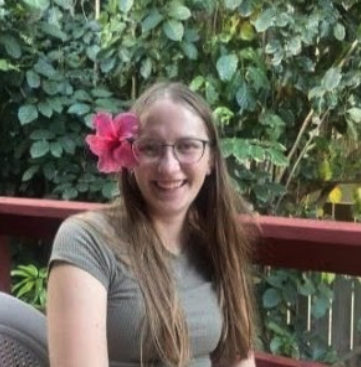
Katy Schlaefer '24
English major with specializations in digital and environmental humanities.
-
I define environmental humanities as a a way of thinking about environmental issues using literature. Using literature to talk about environmental issues allows people to think more deeply about the people being personally impacted rather than as statistics or as a more nebulous concept.
-
I found out about the environmental humanities specialization when I was looking at colleges I might transfer to. I was interested in pursuing it because I had enjoyed a previous class I took that has similar themes called Science for Future Presidents. I have found it to be very helpful in combination with my climate and environmental science classes.
-
I would say that my time as an English major has taught me to be more empathetic towards people. It has also taught me to think about the ways our choices impact those around us. I took Postcolonial literature in theory before deciding to pursue the environmental humanities specialization but this class really helped me think about the inequities certain countries face as climate change continues to impact the landscape. The countries which contribute the least are the countries most impacted by the consequences of climate change.
-
The most important piece I was introduced to is Gun Island by Amitav Ghosh. The book's focus on the politics involved in human movement and migration are particularly important as climate change forces more people from their homes.
-
I personally have not been involved in the events the campus provides in regards to sustainability, the environment, or environmental humanities outside of my courses. I am planning on going to some events about sustainability though.
I am currently doing an internship with the School of Earth and Sustainability (SES) this year in which I do climate science communication work to support SES in developing climate literacy training. For that I reviewed Massachusetts decarbonization plan, which is extensive but does advance the idea that the climate crisis can be addressed using market solutions and without altering the underlying systems of capitalism and settler colonialism. Government agencies like the one that wrote that plan have a great deal of control over what is even considered as a possibility in terms of decarbonizing and climate action, and they often perpetuate the idea that scientific, technical, and economic solutions are the only viable courses of action.