Thinking the Earth: Seminars on the Anthropocene
The dynamics of the Anthropocene present fundamental challenges to traditional disciplinary silos and their capacity to understand systems and respond to crises.
To tell the story of the Anthropocene better and to allow acting on the possibilities for transformative change and just futures, the Anthropocene Lab will bring together an interdisciplinary group of humanists, scientists, social scientists, and artists to pilot a survey of critical literature on the Anthropocene.
These cross-campus, "Thinking the Earth," seminars offer interested faculty and graduate students a platform to engage one of the most contested and noteworthy developments in intellectual history. The way we imagine, speak or write about, or represent the Anthropocene are of critical importance at a time of climate change.
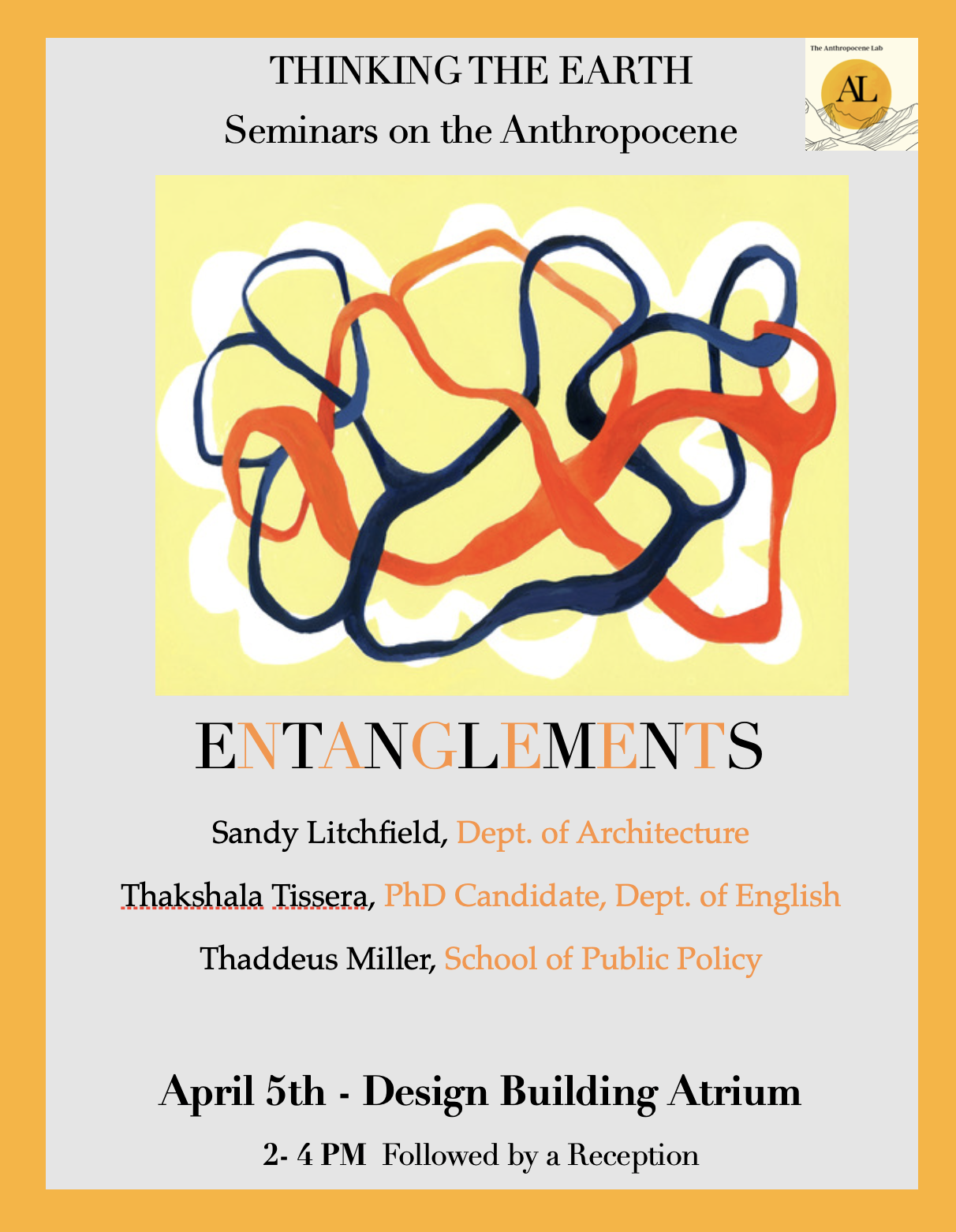
Entanglements
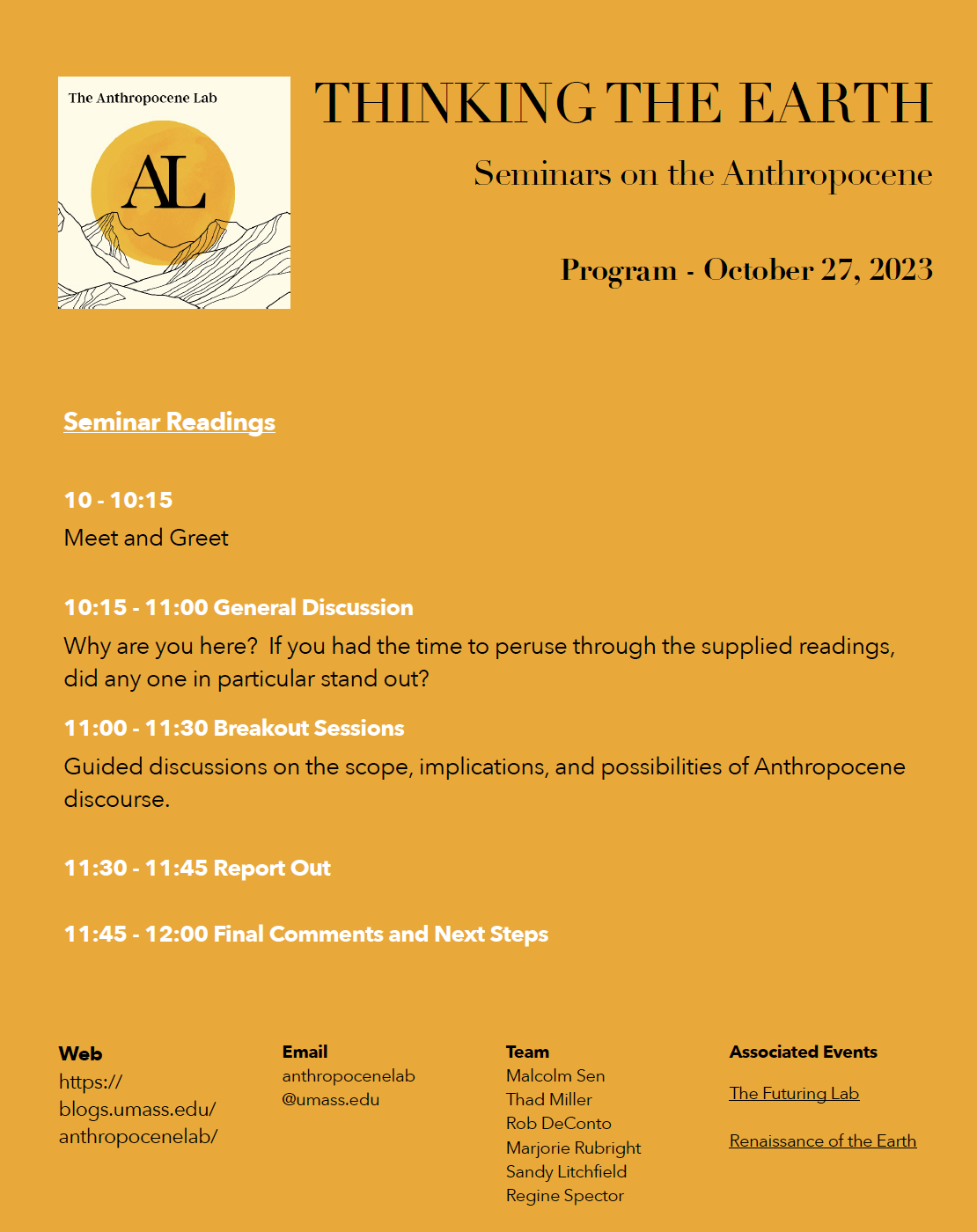
April 4, 2023
2 to 4 pm, Design Building Atrium
In environmental humanities, entanglement refers to the complex, interwoven relationships between humans, nonhuman beings, ecosystems, technologies, and cultural practices. It challenges the idea that humans are separate from nature and instead emphasizes interdependence, co-agency, and mutual shaping. In this seminar, artist Sandy Litchfield (Dept. of Architecture), graduate student Thakshala Tissera (PhD Candidate, Dept. of English), and Associate Professor of Public Policy and Sustainability, Thaddeus Miller (School of Public Policy) discuss how questions of relationality and co-dependence emerge in their creative and scholarly work.
The Alternatives: Writing in the Anthropocene
April 18, 2025, 4 pm
Design Building 170
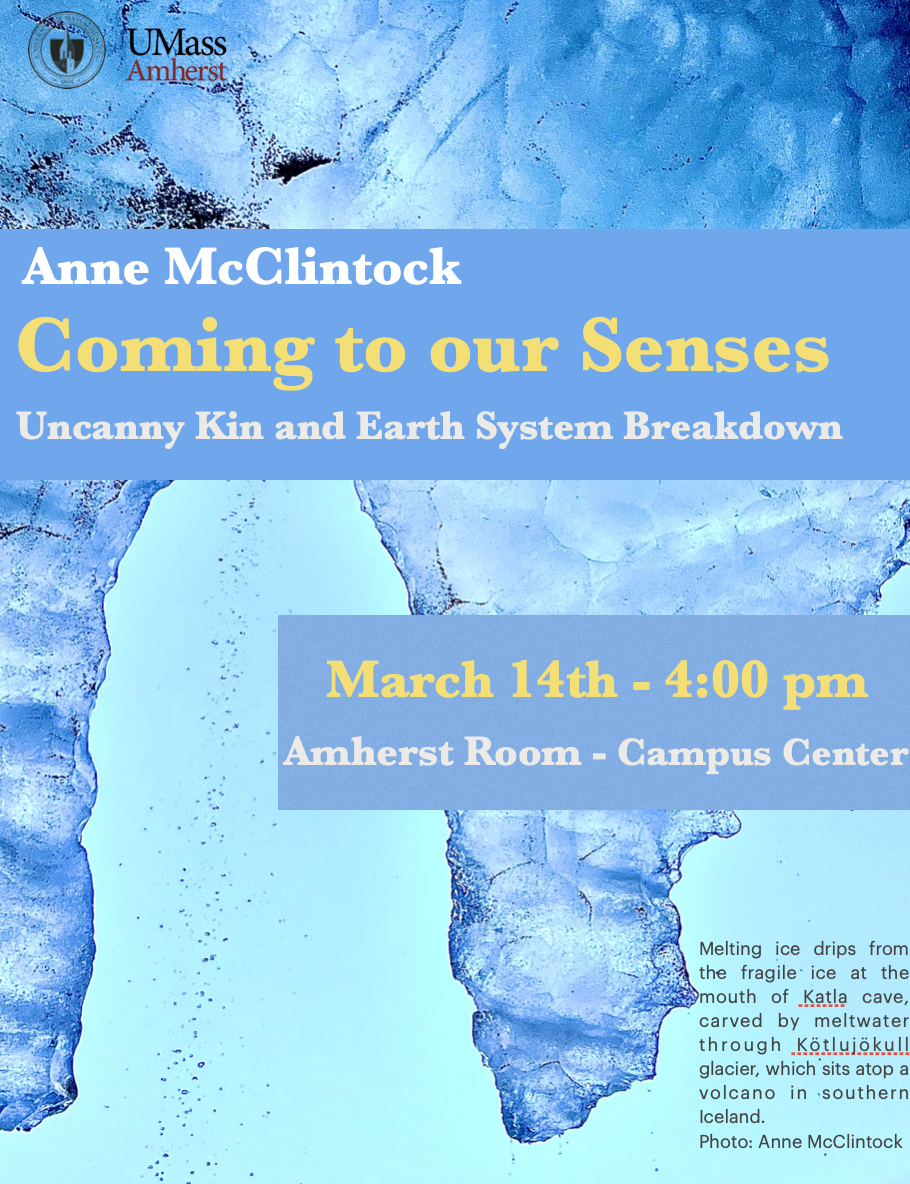
A part of The Great Melt series of events featuring renowned postcolonial and environmental humanities scholar, Anne McClintock, whose recent work explores the intersections of militarization, war and the Anthropocene, and engages deeply with questions of race, gender, sexualities, colonialism, and globalization.
Coming to Our Senses: Uncanny Kin and Earth System Breakdown
March 14, 2023
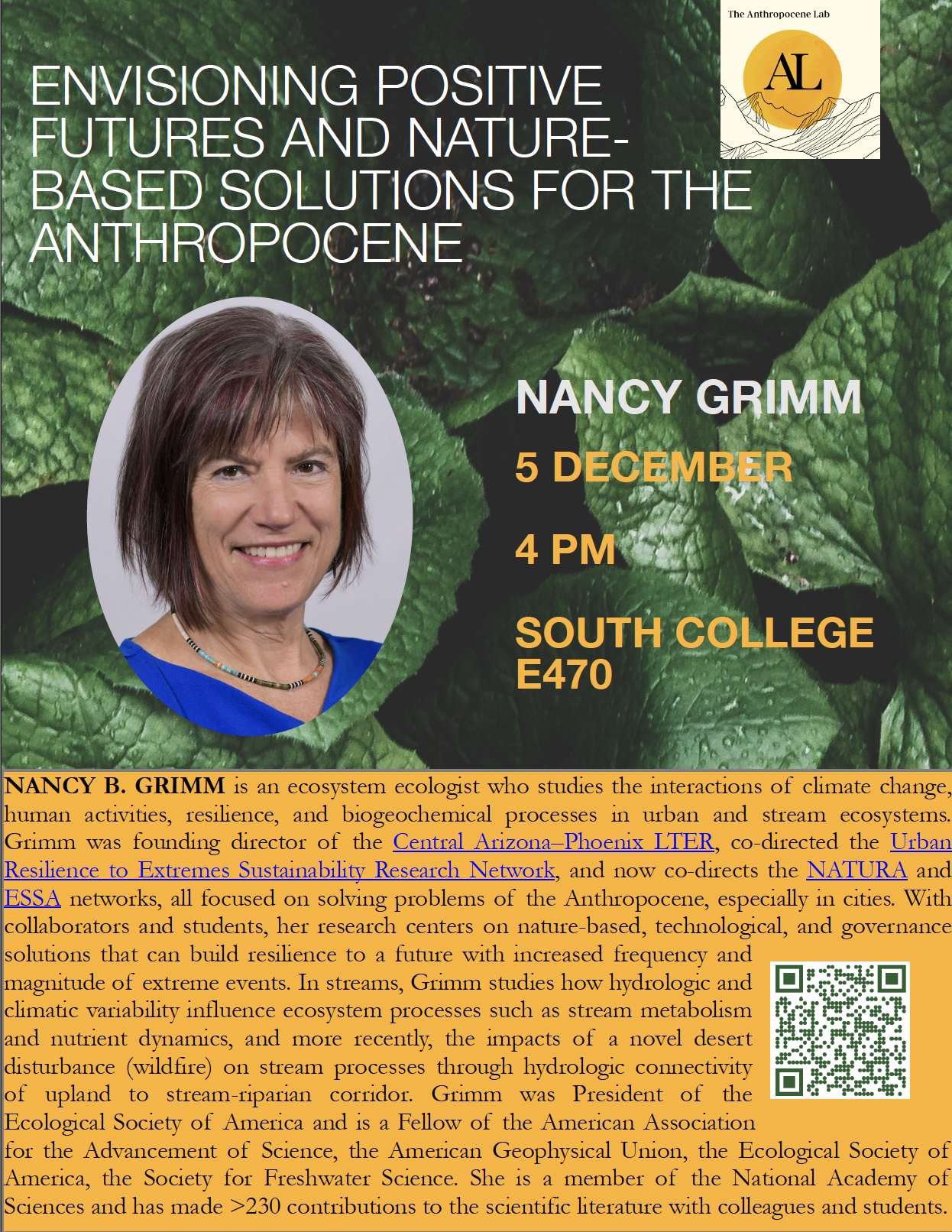
Envisioning Positive Futures and Nature-Based Solutions for the Anthropocene
December 5th, 2023
NANCY B. GRIMM is an ecosystem ecologist who studies the interactions of climate change, human activities, resilience, and biogeochemical processes in urban and stream ecosystems. Grimm was founding director of the Central Arizona–Phoenix LTER, co-directed the Urban Resilience to Extremes Sustainability Research Network, and now co-directs the NATURA and ESSA networks, all focused on solving problems of the Anthropocene, especially in cities. With collaborators and students, her research centers on nature-based, technological, and governance solutions that can build resilience to a future with increased frequency and magnitude of extreme events.
Art and the Arctic
March 13, 2023
4 pm, South College E470
An art talk by artist Siobhán MacDonald, whose award-winning works respond to the climate crisis by capturing tipping points and robustly engaging with climate science. Watch a TEDx by the artist on the left.
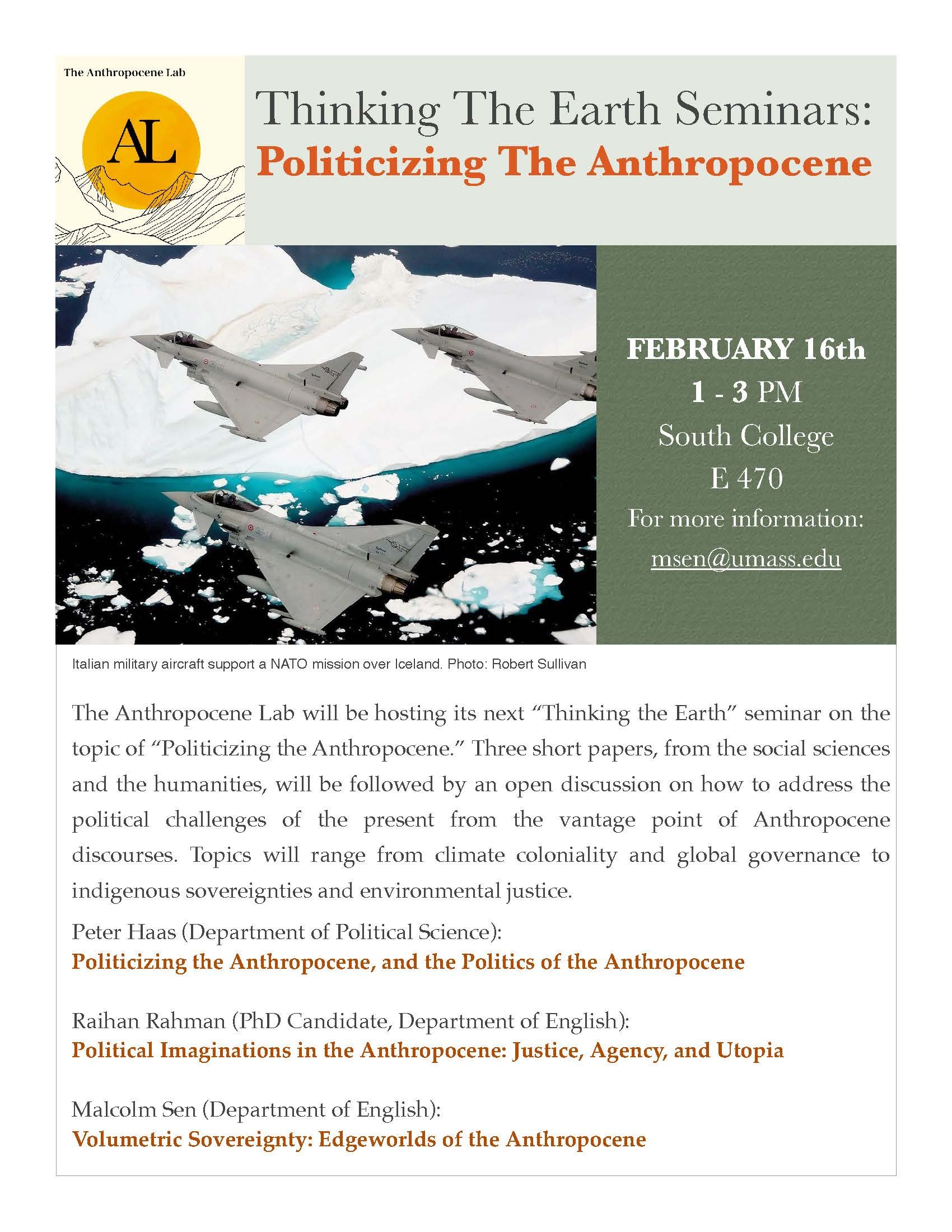
Thinking the Earth: Politicizing The Anthropocene
February 6, 2024, 1-3 pm South College E470
Three short papers, from the social sciences and the humanities, will be followed by an open discussion on how to address the political challenges of the present from the vantage point of Anthropocene discourses. Topics will range from climate coloniality and global governance to indigenous sovereignties and environmental justice.
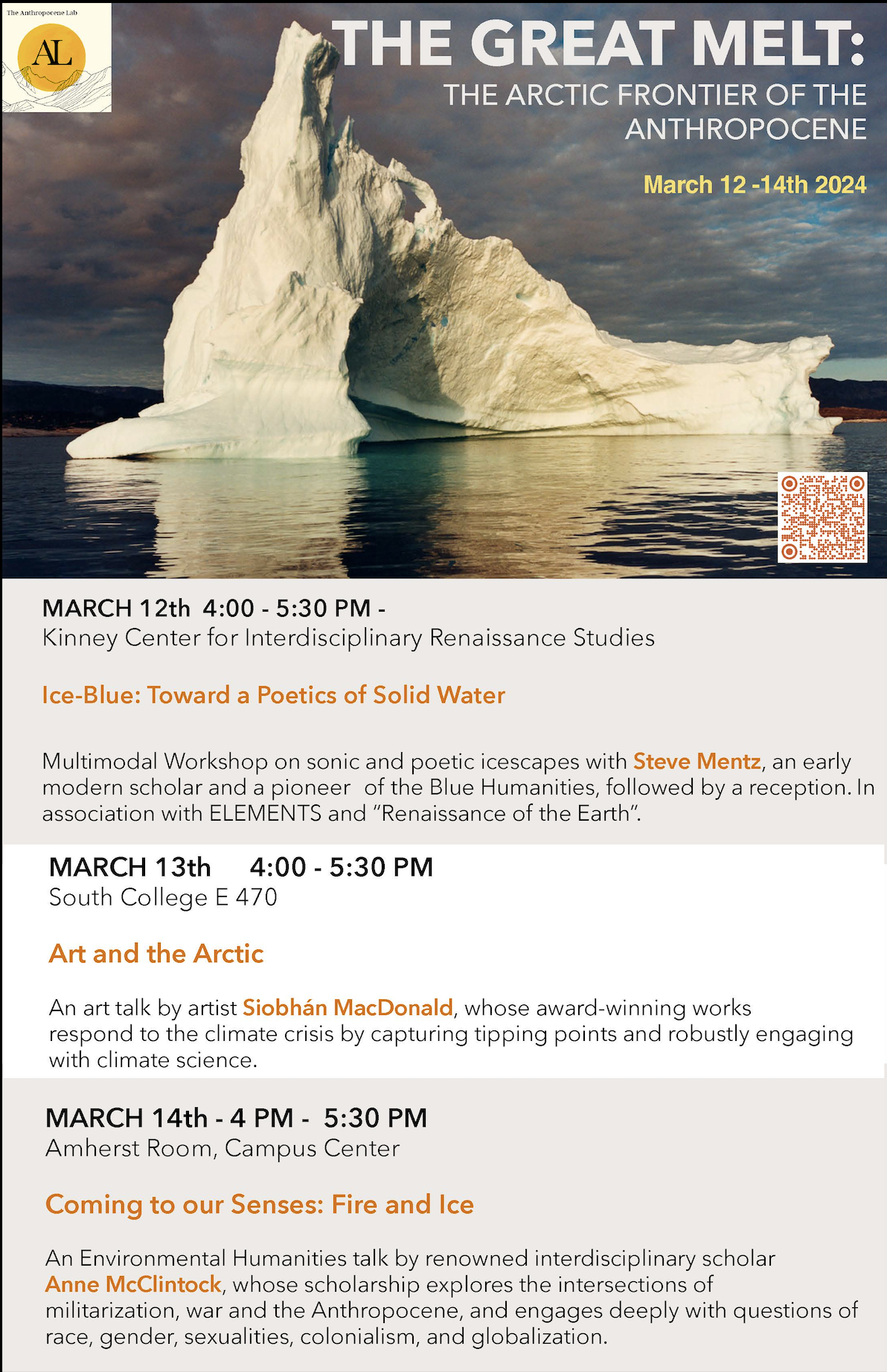
The Great Melt: The Arctic Frontier of The Anthropocene
March 12-14, 2024
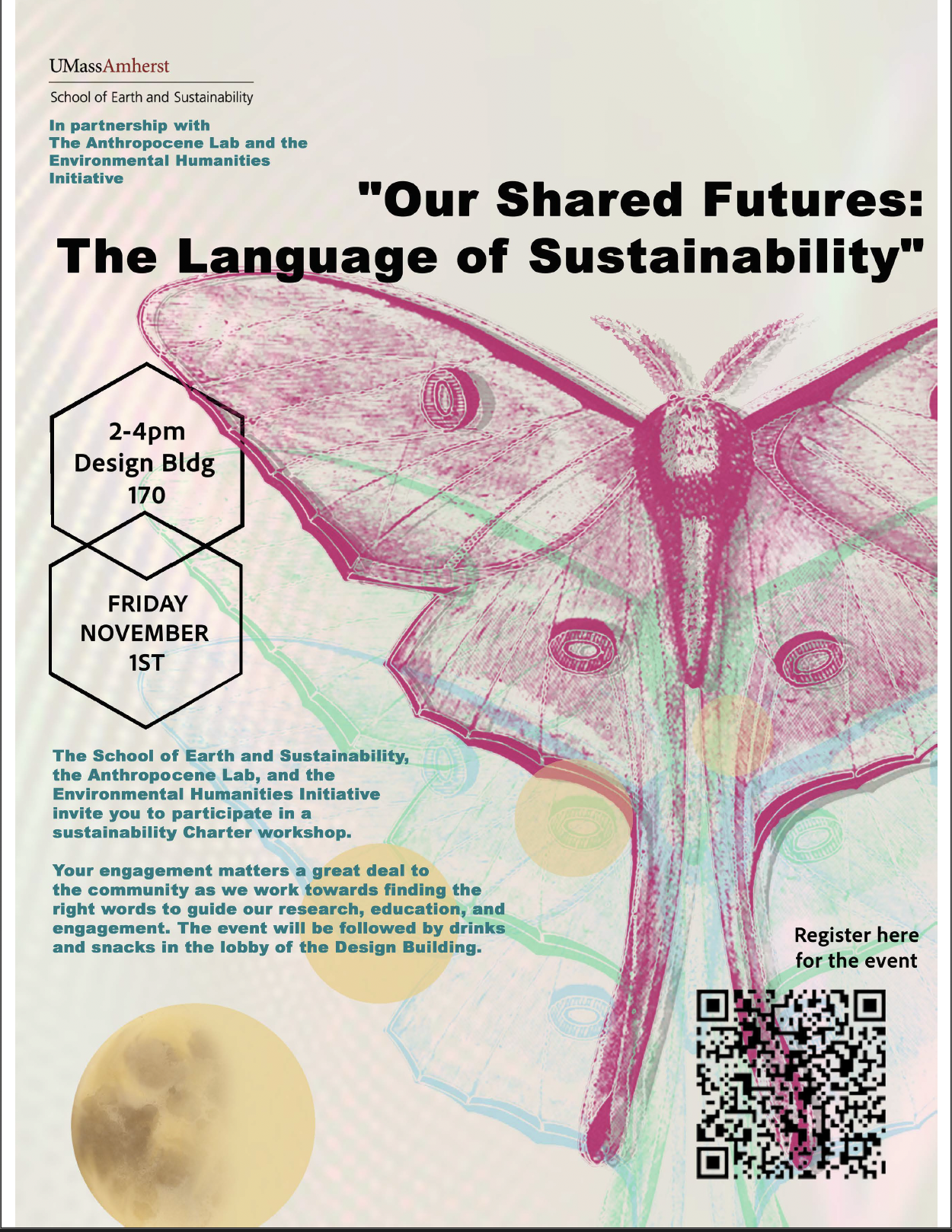
Our Shared Futures: The Language of Sustainability
November 1, 2024, 2-4 pm
Design Building 170
The School of Earth and Sustainability, the Anthropocene Lab, and the Environmental Humanities Collaborative organized a Sustainability Charter workshop to build a common language and find the right words to guide sustainability research, education, and engagement.
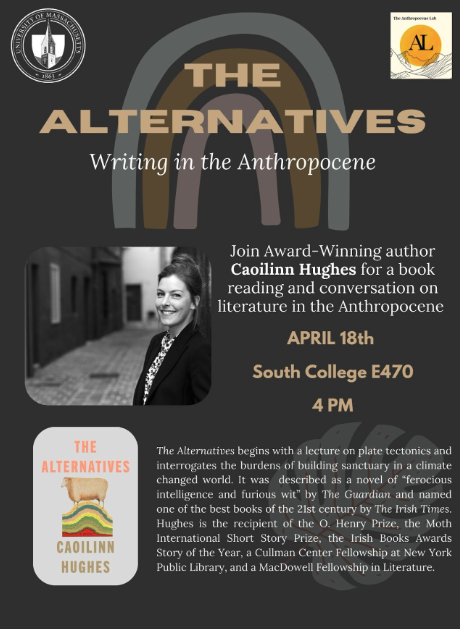
Caoilinn Hughes is an acclaimed Irish author known for her literary fiction that often explores themes of family, identity, and societal change. Her latest novel, The Alternatives (2024), is her third, following Orchid & the Wasp (2018) which won the Collyer Bristow Prize and longlisted for the International Dublin Literary Award, and The Wild Laughter (2020) which won the Royal Society of Literature's Encore Award and was longlisted for the Dylan Thomas Prize.
The Alternatives begins with a lecture on plate tectonics and interrogates the burdens of building sanctuary in a climate changed world. It was described as a novel of “ferocious intelligence and furious wit” by The Guardian and named one of the best books of the 21st century by The Irish Times. Hughes is the recipient of the O. Henry Prize, the Moth International Short Story Prize, the Irish Books Awards Story of the Year, a Cullman Center Fellowship at New York Public Library, and a MacDowell Fellowship in Literature. The Alternatives was featured on NPR.