Reflecting on Art(e)facts: Voices
Kai Martens-Wallace
Working with the Audrey R. Duckert Quabbin Valley Oral History Collection was simultaneously a fascinating exploration into the past, as well as a warning for our future. My research into the collection and its broader implications brought to my attention our ability to learn from the past, and the way we prioritize the idea of the commons. The flooding of the Swift River Valley was an early example of the greater powers at play deciding what to sacrifice for the "greater good" of society. In the case of the Swift River Valley, it was the four towns of Enfield, Prescott, Dana, and Greenwich. Today, entire countries are being buried beneath the waves. The culture, history, and land that were lost between the four flooded towns will be dwarfed by that of the sinking nations. Instead of 2,500 people being displaced, hundreds of millions will be. Instead of four towns in rural Massachusetts being lost, massive coastal urban centers will be. It won't only be their economic value that is lost, but also their unique culture and history.
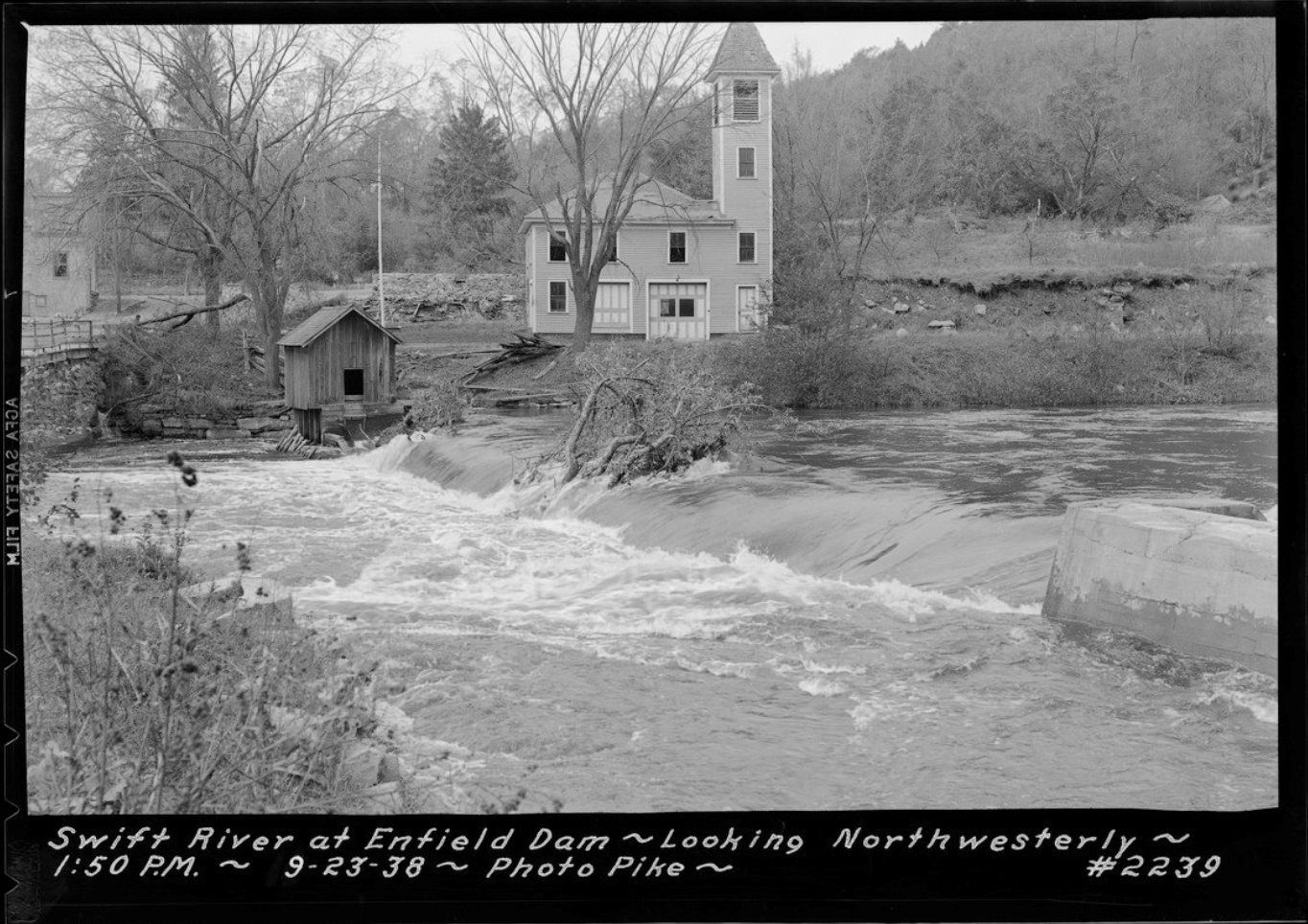
Swift River, flood photo, looking northwesterly at Enfield Dam, Mass., 1:50 PM, Sept. 23, 1938– Courtesy of https://www.digitalcommonwealth.org/search/commonwealth:0z709127t
The audio tape I most closely examined in my work with the Duckert Collection was that of Alice Twible Phillips. I think this particular tape encapsulated the very idea I examined. Whereas many of the tapes discuss the rich and complex genealogy of families who had lived in the four towns, or recorded tours of the area around the reservoir, Alice's tape speaks to the human side of the flooding. She recalls personal memories, the emotions of loss, and the people. She remembers how her father cried when he saw what had become of his home, and she remembers how she and her siblings had played when they were children. And I think this is key to climate discussions today. Too often do we present the idea of climate change as based solely on science. We conjure up images of graphs, of striking numbers, and of rising sea levels and temperatures. But what is lost when we think on such a broad scale is the human aspect. Or more accurately, the human loss.
My work with the Duckert Collection brought with it a newfound perspective on climate change. Because it's what we don't see, what we can choose to ignore, that is the real tragedy of climate change. It is people displaced. Their homes are buried beneath the sea, their memories of what was are lost to time, and they don't have a dedicated historian documenting their experiences. But we have grown comfortable in ignoring it. Because it is not yet our backyard that has given way to the sea.
Tuvalu, Kiribati, the Maldives, and several other nations are already in imminent danger of losing their land and what it holds to the rising sea. And I encourage you to consider those nations. Tuvalu, Kiribati, and the Maldives. Are these nations the ones you might consider most at fault for climate change or rising sea levels? No. These are nations that have been historically colonized and oppressed. They have already had their lands stripped away, their homes destroyed, and their lives altered. And just decades after they gained their independence, their homes are under threat again. From the same distant nations that once colonized them, that now pump emissions into the atmosphere, warming the planet and melting the ice sheets. Those who suffer are often those who have no place in causing the suffering. Just as with the residents of Enfield, Prescott, Dana, and Greenwich. Their homes sacrificed for the "greater good" of a rapidly urbanizing world. But the towns were just the precursor. An early warning of what was to come.
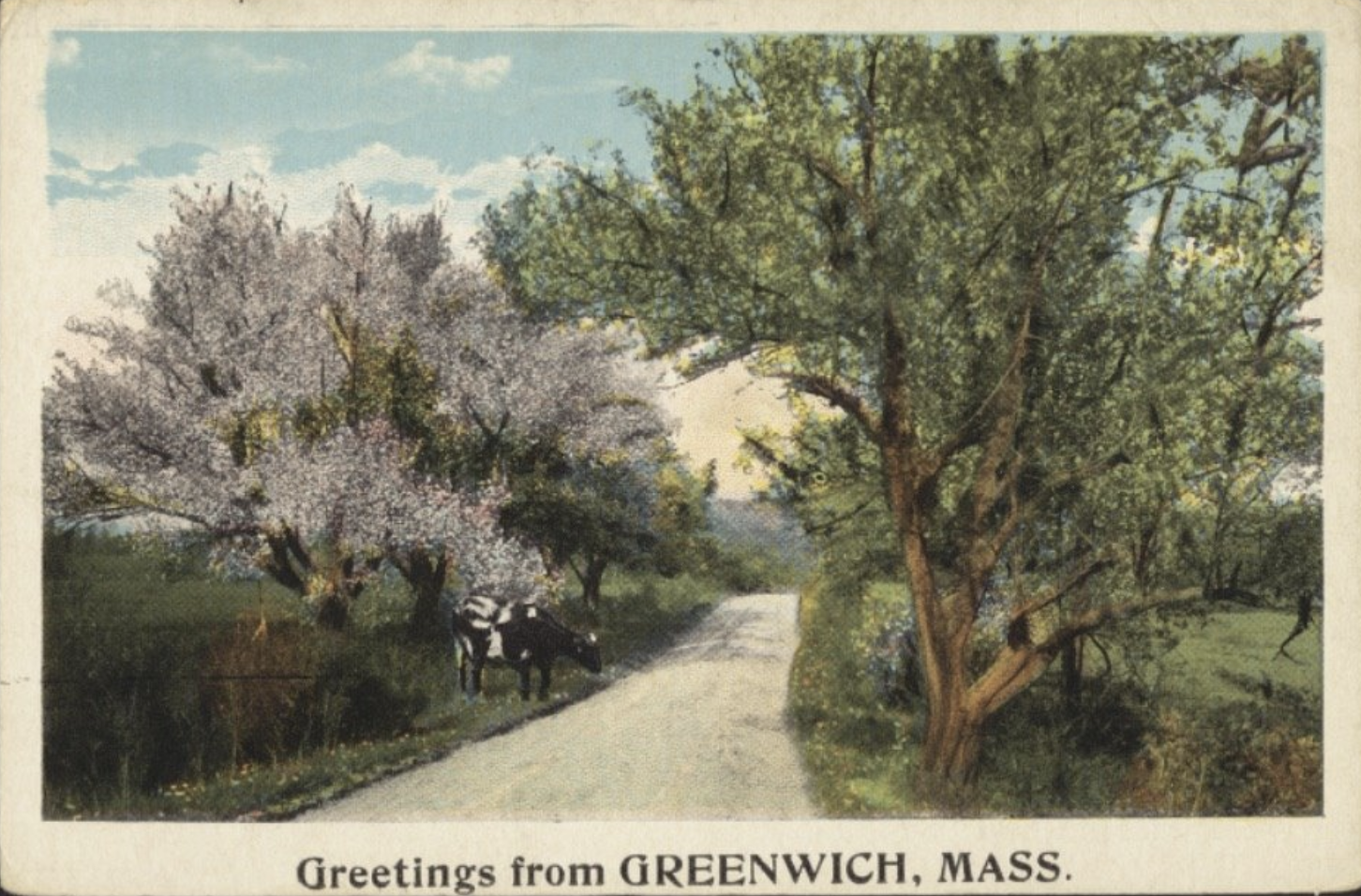
Greenwich, MA postcard before the flood
The flooding of the towns was planned. The state had prepared for years, gave the residents of the towns over a decade to move out, and even compensated them for the land lost. Whether the compensation and the decision were fair is another question, but it was a premeditated flooding. It was deemed necessary to provide for a greater population. But what value does the sinking of small island nations provide? When water flows through the streets of New York, when Shanghai sinks into the salty depths of the ocean, what will we gain? For all that we emit, for all the economic boom we see, for all the "sacrifices" we as a society decide to "make", I ask, what is the point? Are we so self-centered that we can ignore the literal drowning of countries, just because we don't feel the effects? What will any of it matter when half of the land we have today is underwater? What will we tell those fleeing the rising sea? Will we have space for them? Will we have space for the industry we have today? Will we have enough space for farms and forests?
I wonder what we will tell them when they come knocking at our door. Will we tell them that this is not their home, that we have no space for them? Despite it being us who drove them from their homes? They are drowning because it is easy enough for us to turn a blind eye.
If working with the Audrey Duckert Collection taught me something, it is that it's easy to ignore the truth when we don't see it, when we don't feel it. I heard the pain, the joy, and the memories of the former residents of Prescott, Enfield, Dana, and Greenwich. When we focus too much on the scientific aspects of climate change, we forget the most important aspect of it. What we are going to lose is humanity. What is sinking into the ocean is not just land. It is the people who lived on it, their culture, their history, their memories. We need to open our eyes. And the best way to make someone feel, the best way to open one's eyes to reality, is through stories. Humanity and storytelling are intrinsically connected. So I encourage you to listen to the Duckert Collection. Hear their stories. And think, really think about what that would look like on a larger scale. And then, go beyond thinking. Because it is happening. We just need to open our eyes and see it.
